Problem
Sensitive communication systems face harvest-now-decrypt-later risk as quantum-capable attackers become more realistic.
A secure messaging application implementing post-quantum cryptographic algorithms to ensure future-proof communication.
Measured from GitHub public repository data on May 31, 2026.
Sensitive communication systems face harvest-now-decrypt-later risk as quantum-capable attackers become more realistic.
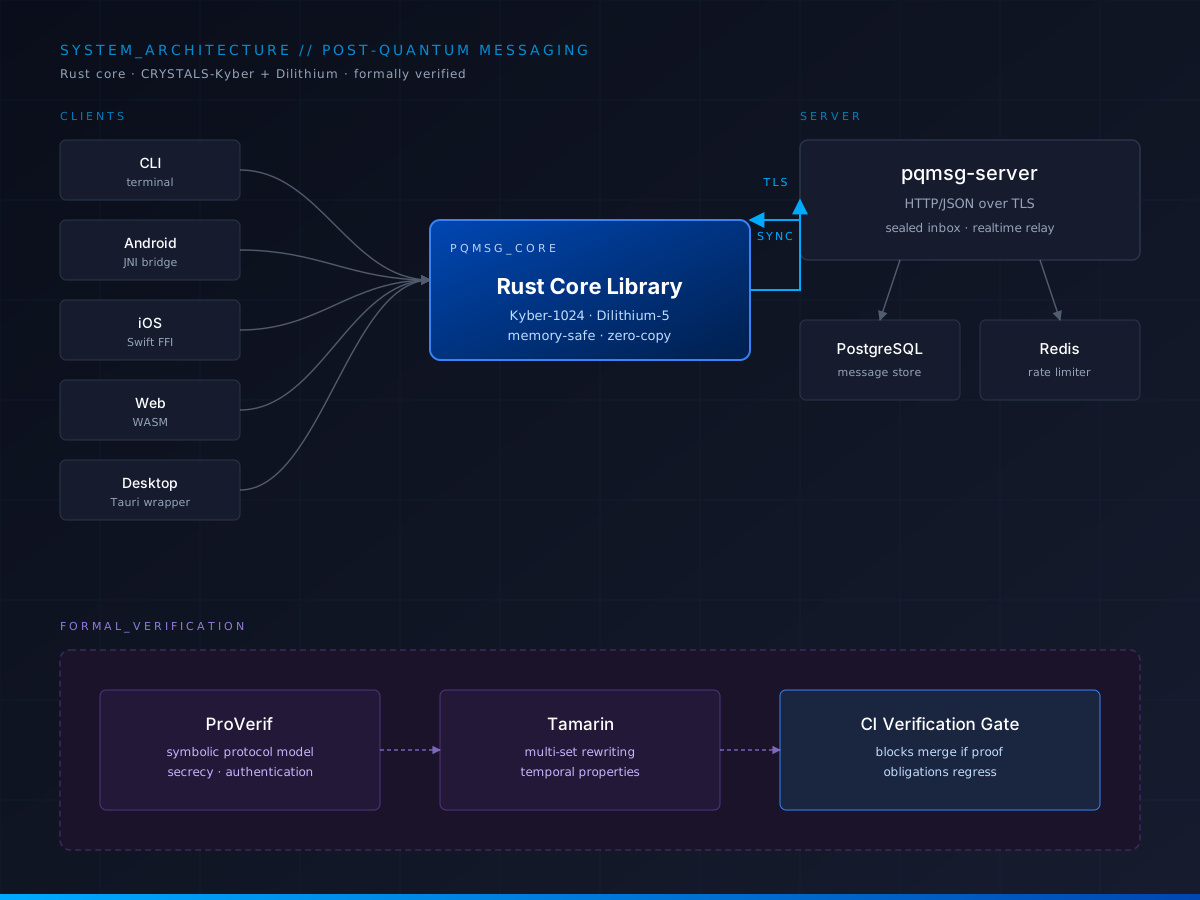
A Rust core provides cryptographic operations for CLI, mobile, web, and desktop bridges, while the server handles sealed inbox synchronization and relay duties.
The design favors memory-safe implementation, post-quantum primitives, sealed message handling, and protocol-model verification gates.
The application demonstrates how a modern messaging stack can isolate cryptography from clients while preparing for post-quantum migration.
Implemented in Rust for memory safety and performance. Utilizes NIST-approved post-quantum cryptographic algorithms (like CRYSTALS-Kyber and CRYSTALS-Dilithium) to secure message exchange against attacks from quantum computers.
Future-proof your communications. As quantum computing advances, traditional encryption will become obsolete. Our post-quantum messaging app ensures your sensitive data remains secure against tomorrow's threats, today.